me Back to the tree
drop assets/spiritual-loop.mp4 here
Dimension 08Internal dimension

Spiritual Wellbeing

You can endure almost any circumstance if you have found a sufficient reason for it, a fact observed under conditions far more extreme than ordinary life tends to produce.

Spiritual wellbeing is your relationship with meaning, purpose, and values: your sense of connection to something larger than your immediate daily experience. As a dimension, it exists independently of religious belief but can include it; what it concerns is the coherence between the values a person would claim and the life they are actually living. Of all eight dimensions, it is the most personal and, for many people, the most quietly neglected.

Owl
The owl in the hollow says

"Knowing why you are doing something, in work, in relationships, in the ordinary texture of a week, changes both how long you can sustain it and how much of yourself you bring to it."

– your guide to the eight dimensions
On the sufficient reason to continue

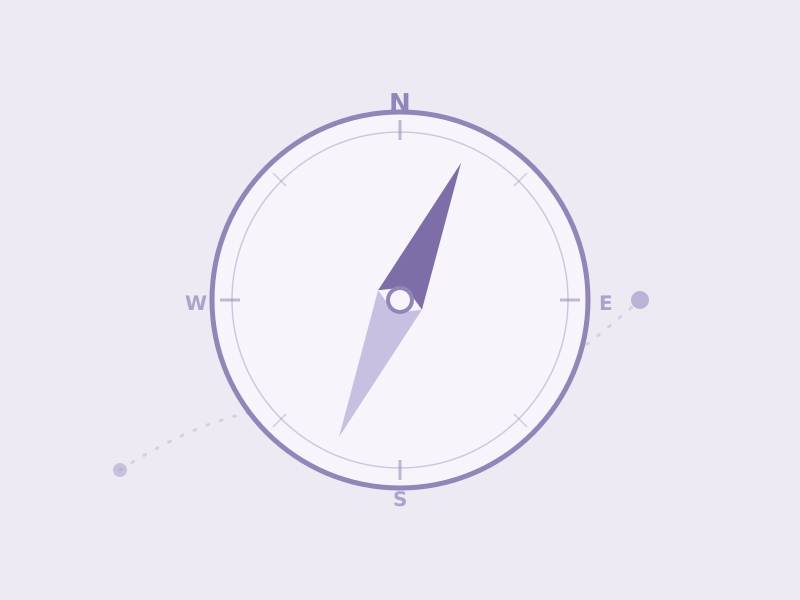
A compass and map – a clear direction
How does it feel when you feel where to go?
A crossroads – many directions, none chosen
And how does it feel not knowing which direction to take?

Spiritual wellbeing is the dimension most likely to be avoided: by the secular, because the word implies religion; by the religious, because what it actually measures extends well beyond any single tradition. The research in this area studies a specific construct: the degree to which a person experiences their life as meaningful, as connected to something beyond their immediate interests, and as oriented toward values that hold even under pressure. It is a measurable variable with documented health outcomes, and it operates entirely independently of theological belief.

Key research finding

A 2014 study by Patrick Hill and Nicholas Turiano, published in Psychological Science, followed 6,163 adults over 14 years and found that people with a strong sense of purpose in life had a 15% lower risk of premature death during the follow-up period, independent of age, education, emotional wellbeing, and other health variables. A related analysis found that those in the bottom quartile of purpose scores faced more than double the mortality risk of those in the top quartile. The proposed mechanism involves the regulation of stress responses, health behaviour, and social engagement: purposeful people take better care of themselves and maintain stronger social ties, because both serve a reason that extends beyond the immediate.

32%
lower risk of stroke among adults with high purpose in life scores
Kim et al., Psychosomatic Medicine, 2013 · read the source
higher mortality risk for adults in the bottom vs. top quartile of life purpose scores
Hill & Turiano, Psychological Science, 2014 · read the source

What the evidence actually says

Carol Ryff's model of psychological wellbeing, developed across decades of empirical research, identifies purpose in life as one of six core dimensions of human flourishing. Of these, purpose shows some of the most robust associations with health outcomes: it predicts lower rates of Alzheimer's disease, reduced stroke risk, better sleep, and greater resilience to adversity. Viktor Frankl's clinical observation, made in nazi concentration camps under conditions no ethics board could ever sanction replicating, was that the capacity to find meaning in suffering was the primary determinant of who endured. What followed was decades of research testing the same hypothesis under far quieter conditions. The finding held.

Purpose
A directional sense of what you are doing with your life and why it matters.
The strongest predictor of longevity among the spiritual wellbeing dimensions.
Values clarity
A clear and examined sense of what you would not compromise even under pressure.
Reduces decisional conflict; provides resilience in adversity.
Transcendence
Regular experience of feeling part of something larger than your immediate concerns.
Associated with reduced anxiety, improved social behaviour, and greater life satisfaction.
Ritual
Small repeated practices that mark time and provide continuity across the ordinary days.
Creates felt meaning without requiring large events; underestimated in secular life.

Of meaning, values, and the small rituals of an ordinary life

Spiritual wellbeing has been measured, in serious psychological research, since at least the 1980s, when Carol Ryff began developing what became one of the most widely used instruments in wellbeing research. The construct measures direction: the degree to which a person's life has coherence, purpose, and a sense of contributing to something that will outlast the moment. These qualities do not arrive on their own; they are built, examined, and occasionally rebuilt.

What spiritual wellbeing is not

Prayer can serve spiritual wellbeing, but the two are not the same thing. Belief in God correlates with some of its outcomes without being required for them. Meditation engages some of its mechanisms without defining them. Spiritual wellbeing, in the research literature, is a functional construct about meaning-making: the degree to which a person experiences their life as oriented, as mattering in some sense that extends beyond immediate pleasure or discomfort, and as connected to values that feel genuinely their own. Of all eight dimensions, it is the one most resistant to being solved by a product and most responsive to sustained reflection.

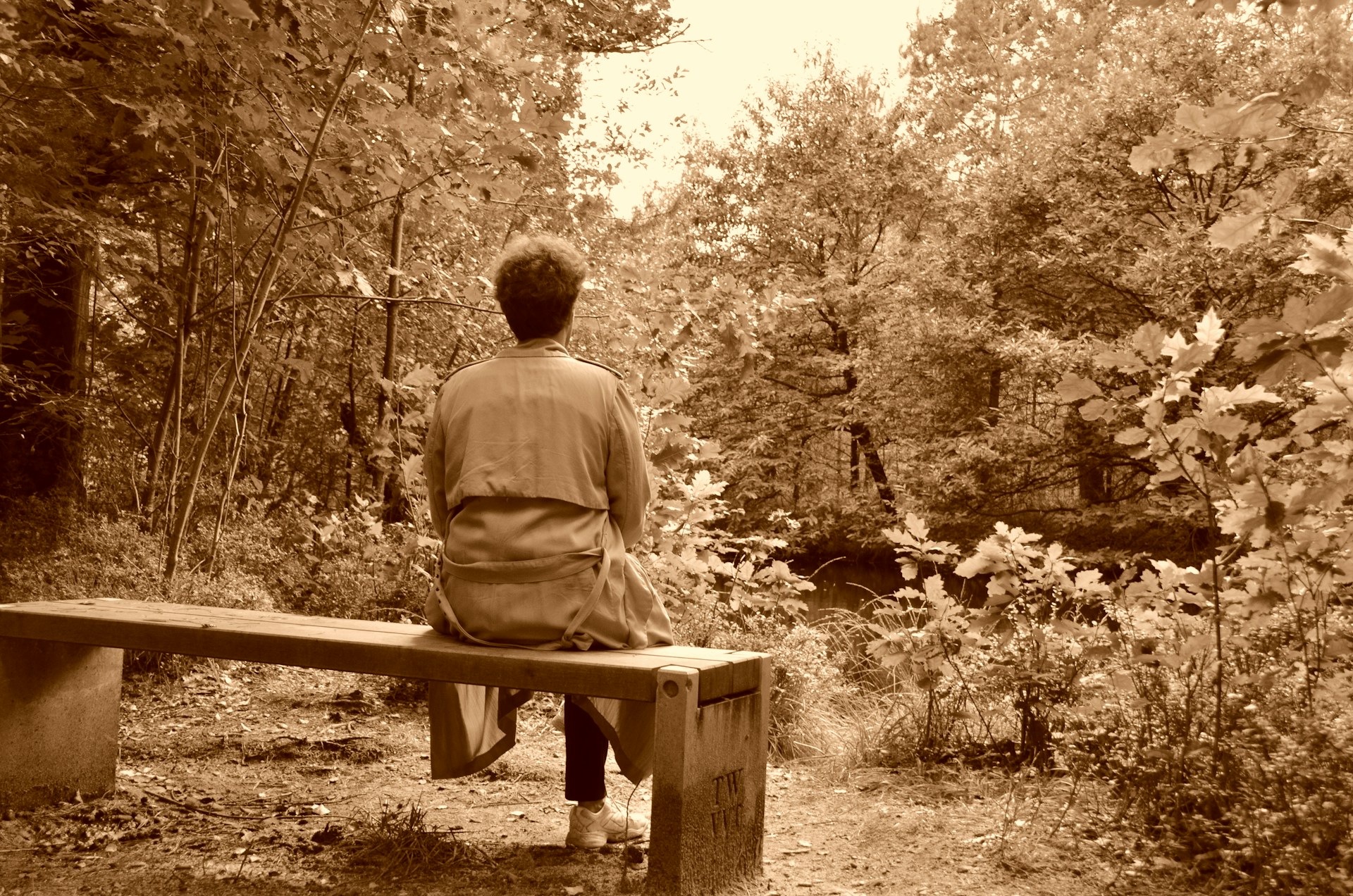
Meditation, seen from behind
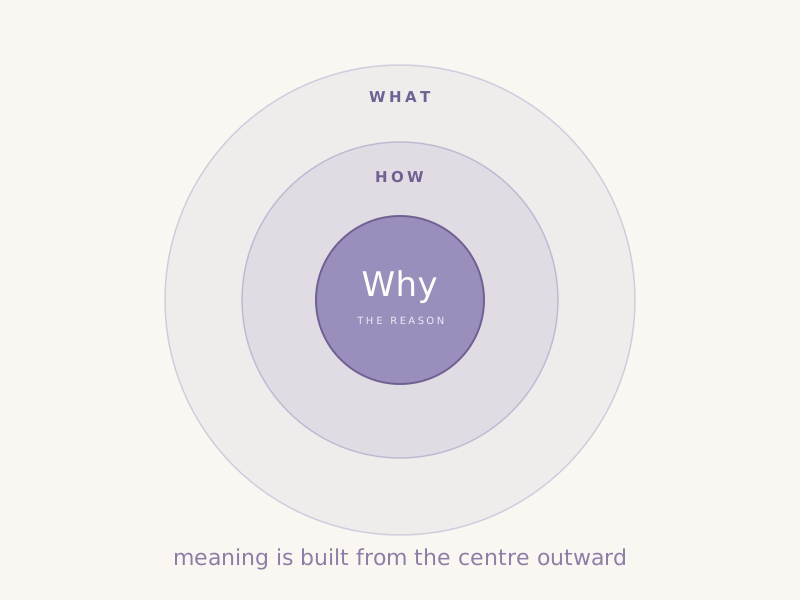
Why, how, what – meaning begins at the centre

The Frankl argument

Frankl's contribution was the observation that meaning-making is the distinctly human faculty: the ability to choose one's response to a given situation even when the situation itself cannot be chosen. Contemporary research has taken a less grand view of the same mechanism: purpose in the normal range of adult life (at work, in relationships, in how people describe their own history) shows robust associations with health and wellbeing, independent of wealth, status, and circumstance. The Frankl argument, stripped of its philosophy, is simply this: meaning is a resource, and like most resources, its absence costs something. What sets it apart from other resources is that it cannot be found or received; meaning has to be constructed, and the construction is always personal.

The small rituals of ordinary life

Ritual (repeated, deliberate, charged with some felt significance) is one of the primary mechanisms through which humans create the experience of continuity and meaning in time. Research by Michael Norton and Francesca Gino found that people who engaged in rituals before and after significant events reported greater sense of control and reduced grief, even when the rituals were personally invented and had no prior cultural weight. A ritual needs only to be consistent, intentional, and personally meaningful; its religious or cultural provenance is beside the point. Morning routines, weekly practices, seasonal markers: these are not incidental. They are the architecture through which an ordinary life acquires the texture of meaning.

"A ritual needs only to be done with the knowledge of why it is being done. Everything else is optional."

Three exercises for spiritual wellbeing

None of these require a religious practice, a meditation cushion, or an unusual tolerance for existential discomfort. They require only the willingness to spend a small amount of time in questions that most adults are too busy to ask themselves.

Exercise 01
15 min

The Value Scan

  1. Write down the values you would not compromise under pressure – not the ones you aspire to, but the ones you actually hold, the ones that have cost you something in the past because you refused to abandon them.
  2. For each, name a recent moment when you acted in accordance with it, and a recent moment when you did not. Be specific. This is not a confession; it is cartography.
  3. Notice where there is consistency between what you say you value and how you spend your time and money. Notice where there is not. The gap is not moral evidence. It is practical information about what your life is actually organised around.
  4. A person whose stated values and actual behaviour are substantially aligned does not need to work at meaning. It is already there, in the texture of the choices.
Exercise 02
10 min

The Legacy Question

  1. Write down what you would want the people who know you best to say about how you moved through the world – not at your funeral, but informally, in an honest conversation about the kind of person you were. Be specific: what qualities, what contributions, what way of being with people?
  2. Compare this to how you have actually been behaving over the past month. Not as a verdict: as a navigation check.
  3. If there is a discrepancy, name the smallest possible action that would move your actual behaviour one degree in the direction of the legacy you described.
  4. The purpose of the legacy question is not to make you anxious about time. It is to remind you that you are already answering it, every day, whether you have thought about it or not.
Exercise 03
10 min

The Ritual Inventory

  1. Name the small, repeated practices you already have that create a felt sense of meaning, continuity, or significance in your days: a specific way you begin the morning, a weekly practice with people you love, a seasonal habit, anything that feels charged with deliberate intention.
  2. For each, ask: do I do this because it matters to me, or because I have simply always done it? If it matters, it is a ritual. If not, it is a habit, and the difference is significant.
  3. If you cannot find any, notice what you actually do with the transitional moments of your day – morning, evening, the beginning of the week – and ask whether you want them to be more intentional.
  4. A ritual does not need to be elaborate. It needs only to be done with the knowledge of why it is being done. That is the whole of it.
Owl
What comes next

Ready to put this into practice?

Four tools for this dimension – from a free printable guide to a full seasonal workbook. Each designed to make the change last.

scroll to explore
Practice this dimension

Four ways to begin with spiritual wellbeing

Each product can be used alone, or layered as a season-long practice. Begin with the free guide; the rest is patient work.

Free · 34 pages

The Free Guide

A printable PDF covering all eight dimensions of wellbeing – evidence, exercises, and a map for the whole tree. Yours in exchange for an email address you will not regret giving.

Free
Take the quiz, the guide follows by email →
30 days · daily prompt

30 Days of Practice

Four thematic weeks. One small practice each day, 5–20 minutes, building from one orientation to the next. By day thirty, the practice has had time to settle – a beginning, with enough evidence of its own to continue.

From €19
Notify me when ready
Waiting list · under production.
Quarterly · 13 weeks

Quarterly Workbook

A bound workbook for one season: weekly meaning audits, deeper essays on purpose and values, three reflective rituals.

From €49
Notify me when ready
Waiting list · research ongoing.
online · 60 minutes

Webinar

A online conversation about what gives the hours their weight, and what would have to be true for that weight to feel chosen.

By inquiry
Notify me about the next session
Next session · join the list.
After reading · score yourself in the other seven

Where else does the body need looking after?

You have just read about one dimension. The other seven sit on the same tree. A short, quiet self-assessment will tell you which to attend to next, and the result lands in your inbox.

Take the quiz
25 questions · no shame in any score
Recommended reading · affiliate

Books for spiritual wellbeing

Five titles we return to. We earn a small fee if you buy through these links.

Research sources

Hill & Turiano, Psychological Science, 2014 · link · Ryff, Social Indicators Research, 1995 · link · Frankl, Man’s Search for Meaning, 1946 · Ryff & Singer, Psychological Inquiry, 1998 · link · Norton & Gino, J. Experimental Psychology: General, 2014 · link · Steger et al., J. Counseling Psychology, 2006 · link