me Back to the tree
drop assets/occupational-loop.mp4 here
Dimension 04External dimension

Occupational Wellbeing

A third of your conscious life happens at work, and most of the advice about how to spend it stops at the job title.

Occupational wellbeing is the degree to which your working life provides meaning, appropriate challenge, autonomy, and genuine connection with others. The dream job framing is not useful here: it produces more suffering than it resolves. What the research asks instead is whether the work you do most of your days feels like it is going somewhere, involves you as a person rather than a function, and leaves you at the end of it with some recognisable version of your own energy.

Owl
The owl in the hollow says

"The body does not distinguish between a hard day and a wasted one by the hours logged: it distinguishes by whether the effort went somewhere worth going."

– your guide to the eight dimensions

On the slow politics of how you spend your days

Sunday evening dread
How do you feel when you have so much to do you don't even know where to start?
Good working day
How does it feel knowing exactly what you have to do and having a plan to follow?

The occupational dimension is the one most people have the strongest opinions about and the least examined relationship with. We accept conditions at work that we would not accept anywhere else: the interruptions, the meetings that could be emails, the ambient sense that what we do does not quite matter. The research on occupational wellbeing is clear: engagement at work is a health variable, not a luxury or a performance marker. The consequences of chronic disengagement, across physical, psychological, and relational dimensions, are well documented and consistently underestimated.

Key research finding

The Gallup 2023 State of the Global Workplace Report found that only 23% of employees worldwide are engaged at work. The remaining 77% are either not engaged (going through the motions) or actively disengaged (working against their employer's interests). The estimated cost in lost productivity: $8.8 trillion annually. The human cost is harder to quantify and considerably higher.

23%
of the global workforce is engaged at work – the rest are surviving, not thriving
Gallup State of the Global Workplace, 2023 · read the source
higher wellbeing reported by people who find meaning in their work, vs. those who do not
Wrzesniewski et al., J. Research in Personality, 1997 · read the source

What the evidence actually says

The research on occupational wellbeing identifies four consistent levers: meaning (a sense that the work matters, at some level), autonomy (genuine control over how and when the work is done), mastery (the opportunity to grow in something you care about), and connection (real relationships with at least some colleagues). The last of these is the most undervalued: a close friendship at work is one of the strongest predictors of engagement and retention, independent of pay.

Meaning
The sense that the work matters – to someone, in some way that you can trace.
Strongest predictor of occupational wellbeing; more powerful than pay above a baseline.
Autonomy
Genuine control over method, timing, or scope of work.
Predicts engagement, performance, and resistance to burnout independently.
Mastery
The opportunity to develop and demonstrate skill in something you find genuinely interesting.
Produces sustained motivation; absent from most burnout narratives.
Connection
At least one person at work you would call a friend, in some meaningful sense.
Gallup's single strongest predictor of engagement; more stable than management or mission.

Of meaning, mastery, and the engagement question

Three aspects of occupational wellbeing carry the most weight in research and in practice: the presence or absence of genuine meaning, the difference between busyness and deep work, and the identity trap that makes occupational change harder than it needs to be.

The engagement question

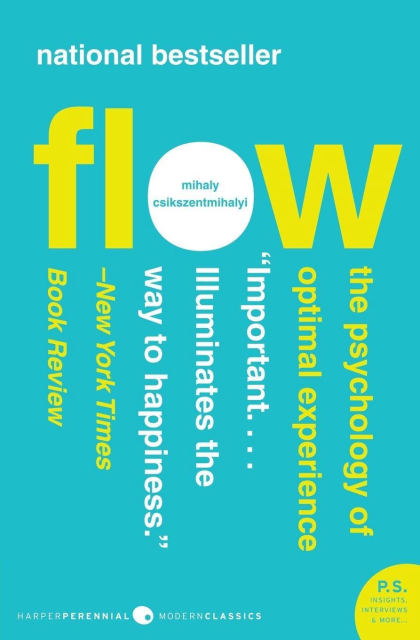
Engagement differs from enthusiasm: enthusiasm is available without skill, while engagement requires bringing your whole competence to the work, including the parts that are difficult, uncertain, or unrewarded. Csikszentmihalyi's flow research shows that deep engagement requires a specific condition: that the challenge of the work slightly exceeds current skill. When the task is too easy the mind drifts; when it is too hard the mind freezes. The sweet spot, and the reason some people are absorbed by work that looks unremarkable from the outside, is calibration: not every task can hit it, but a working life can be organised to include enough of them.

Absorbed in the craft – deep, engaged work
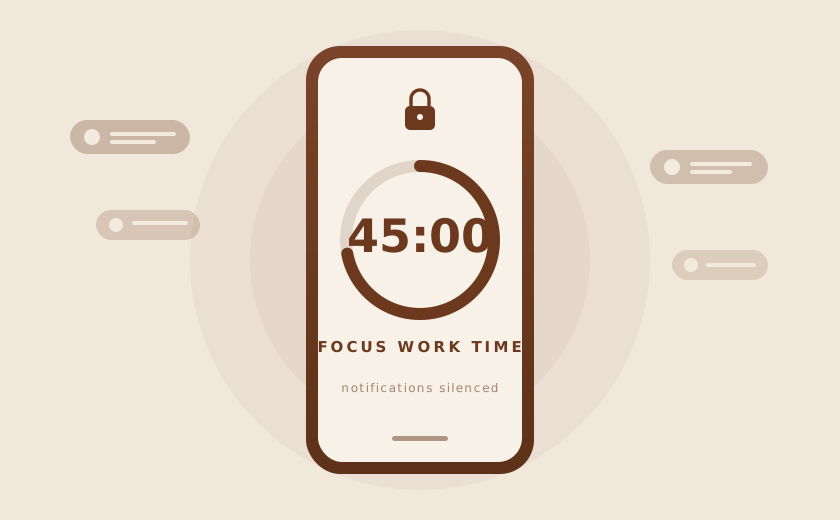
Focus work – phone locked for 45 minutes, notifications silenced

Deep work and distraction

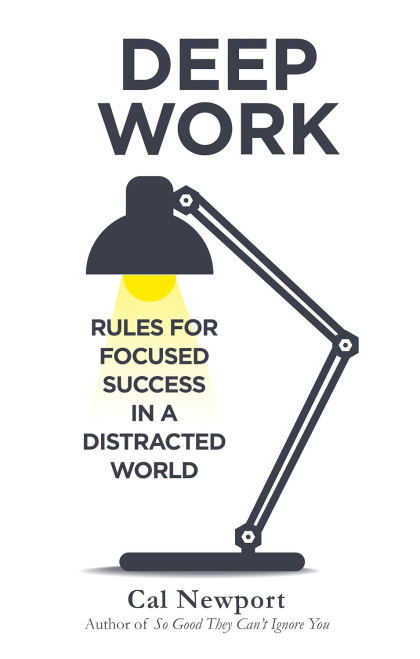
Cal Newport's research documents what most knowledge workers have noticed but not named: that the ability to focus without distraction is becoming both rarer and more valuable simultaneously. The average knowledge worker checks their inbox every six minutes. Each interruption carries a recovery cost of approximately twenty-three minutes before full cognitive re-engagement. What looks like a busy workday is often a day of interrupted fragments – none long enough to produce anything the worker would recognise as their best work.

The identity trap

The most common obstacle to occupational change is identity, not circumstance. When work and self become fused, the question "should I do something different?" becomes "should I be someone different?": a much harder question to answer honestly. Most people stay in work that does not fit them not because they cannot leave, but because they have no identity available to leave into. Career transitions research shows consistently that identity exploration precedes successful change: the next role tends to be discovered through action, not arrived at through analysis of the current one.

"The cost of confusing what you do with what you are rarely shows up on the pay slip."

Three exercises for a more meaningful working life

None of these require a new job, a sabbatical, or more courage than you currently have. They require only the willingness to look at what is actually happening in the hours you spend working.

Exercise 01
20 min

The Energy Audit

  1. At the end of each working day for one week, note which tasks gave you energy and which took it away. Not which were easy or difficult – which left you more or less yourself.
  2. At the end of the week, look for patterns. The energising tasks are data about your strengths; the draining ones are data about misalignment.
  3. Ask: is there a version of your role – or a different role entirely – where the ratio could shift?
  4. The point is not to eliminate difficult work. It is to ensure that the difficult work is at least in the direction of something you care about.
Exercise 02
60 min

The Craft Hour

  1. Block one hour in your working week – defended, undistracted, notification-free – for a piece of work you consider genuinely important.
  2. Do not use this hour for email, meetings, or tasks that are urgent but not meaningful. This hour is for depth.
  3. Notice what happens to your experience of the day when it contains at least one stretch of real work.
  4. The craft hour is not a productivity technique. It is a proof of concept: that real work is still possible, and what it feels like.
Exercise 03
30 min

The Work Values Map

  1. Write the names of three people whose working lives you admire – not for their income, but for something about how they spend their time.
  2. For each, identify what specifically you admire. The pattern will tell you something about your own values that a direct question might not.
  3. Compare what you find to your current work. Where is the gap largest? Where is there more alignment than you thought?
  4. Values are not aspirations. They are descriptions. This exercise is about discovering what you already believe, not deciding what you should.
Owl
What comes next

Ready to put this into practice?

Four tools for this dimension – from a free printable guide to a full seasonal workbook. Each designed to make the change last.

scroll to explore
Practice this dimension

Four ways to begin with occupational wellbeing

Each product can be used alone, or layered as a season-long practice. Begin with the free guide; the rest is patient work.

Free · 34 pages

The Free Guide

A printable PDF covering all eight dimensions of wellbeing – evidence, exercises, and a map for the whole tree. Yours in exchange for an email address you will not regret giving.

Free
Take the quiz, the guide follows by email →
30 days · daily prompt

30 Days of Practice

Four thematic weeks. One small practice each day, 5–20 minutes, building from one orientation to the next. By day thirty, the practice has had time to settle – a beginning, with enough evidence of its own to continue.

From €19
Notify me when ready
Waiting list · under production.
Quarterly · 13 weeks

Quarterly Workbook

A bound workbook for one season: weekly audits, deeper essays, three reflective rituals. Designed for slower progress that compounds rather than burns out.

From €49
Notify me when ready
Waiting list · research ongoing.
online · 60 minutes

Webinar

A guided look at your working life with the four levers as the lens. We arrive at three changes you would have arrived at alone, in roughly half a year.

By inquiry
Notify me about the next session
Next session · join the list.
After reading · score yourself in the other seven

Where else does the body need looking after?

You have just read about one dimension. The other seven sit on the same tree. A short, quiet self-assessment will tell you which to attend to next, and the result lands in your inbox.

Take the quiz
25 questions · no shame in any score
Recommended reading · affiliate

Books that shaped this dimension

Five titles that informed the writing here, with our honest commentary. We earn a small fee if you buy through these links.

Research sources

Gallup State of the Global Workplace, 2023 · Wrzesniewski et al., J. Research in Personality, 1997 · Csikszentmihalyi, Flow, 1990 · Newport, Deep Work, 2016