me Back to the tree
drop assets/social-loop.mp4 here
Dimension 02External dimension

Social Wellbeing

Your nervous system has its own take on who you spend time with and how you spend it.

Social wellbeing tends to get simplified into loneliness versus not-lonely, or the number of people in your circle, or whether you prefer a crowd or a quiet room. The research concerns itself with something narrower: the quality of what actually passes between people: the reciprocity, the honesty, and whether the relationships someone is in regularly leave them more or less intact. These variables have measurable effects on health. They are also almost entirely absent from the usual conversation about connection.

Owl
The owl in the hollow says

"Loneliness registers in the body the way cold does – as a signal that something necessary is missing. Not a mood to be managed, but a physiological state with measurable consequences."

– your guide to the eight dimensions

On the quiet medicine of other people

Distracted conversation
How do you feel after a conversation that goes nowhere?
Genuine connection
And after one that goes somewhere real?

The research on social wellbeing consistently identifies four active ingredients: depth (the degree to which relationships involve genuine self-disclosure), reciprocity (whether both people invest roughly equally), presence (how often you are physically or attentively together), and community (whether you belong to something beyond your closest relationships). What the research keeps finding is that loneliness has little to do with the number of people present and everything to do with the quality of contact among them – a calendar full of obligations is no protection against it.

Key research finding

Julianne Holt-Lunstad's 2010 meta-analysis of 148 studies found that people with strong social relationships have a 50% higher likelihood of survival compared to those with inadequate social connections. The effect size is comparable to quitting smoking and twice as powerful as exercise – making social isolation one of the most significant health risks of modern life.

50%
higher likelihood of survival with adequate social relationships
Holt-Lunstad et al., PLOS Medicine, 2010 · read the source
15 cigarettes
per day – the mortality equivalent of social isolation
Holt-Lunstad et al., Perspectives on Psychological Science, 2015 · read the source

What the evidence actually says

The research on social wellbeing consistently identifies four active ingredients: depth (the degree to which relationships involve genuine self-disclosure), reciprocity (whether both people invest roughly equally), presence (how often you are physically or attentively together), and community (whether you belong to something beyond your closest relationships). What the research keeps finding is that loneliness has little to do with the number of people present and everything to do with the quality of contact among them – a calendar full of obligations is no protection against it.

Depth
Regular conversations that go below the surface, even with one person.
Strongest predictor of relationship satisfaction; reduces inflammatory markers.
Reciprocity
Giving and receiving in roughly equal measure over time.
Prevents the chronic stress of one-sided relationships; builds trust.
Presence
Uninterrupted time with people you care about, phone away.
Activates oxytocin; lowers cortisol more effectively than solitude.
Community
Belonging to something – a group, a practice, a place – beyond the individual relationship.
Longevity marker; associated with lower rates of dementia and depression.

Of depth, presence, and the biology of belonging

Three aspects of social wellbeing carry the clearest research footprint: the depth of individual relationships, the quality of presence you bring to them, and the protective effect of community. Each is learnable. None requires charisma.

The biology of belonging

The body monitors social connection the way it monitors temperature. John Cacioppo's decades of research on loneliness showed that lonely individuals have elevated cortisol, disrupted sleep architecture, higher inflammatory markers, and an immune system that has quietly shifted into a defensive posture. None of this is metaphor: the biology responds to felt disconnection the same way it responds to any other signal of threat. Attending more social events rarely addresses it. What the body is asking for is quality of contact, which is a different request entirely.

Warm gathering
Peaceful solitude

Loneliness vs. solitude

Solitude is chosen withdrawal; loneliness is unwanted disconnection. The distinction matters because the research on loneliness does not apply to introverts who choose their own company. What registers as threat is not aloneness but the absence of felt connection – the sense that no one would notice, or care, if you disappeared. Two hours of genuine conversation per week does more for loneliness than twenty hours of surface-level socialising.

The quality question

The Harvard Study of Adult Development, after eighty-five years and thousands of lives tracked, arrived at a conclusion so simple it embarrassed the researchers: good relationships, more than wealth, fame, or achievement, are what keep people healthy and happy. The quality of those relationships, specifically how honest, how reciprocal, and how often someone feels genuinely known within them, proved to be among the strongest predictors of how long and how well a person lives. The researchers had expected something more complicated.

"Good relationships, the data kept insisting, matter more than anything else the researchers thought to measure."

Three exercises for deeper connection

None of these require a social life you do not have. They require only the willingness to bring more of yourself to the relationships already within reach.

Exercise 01
20 min

The Three Names

  1. Write the names of three people with whom you have had a genuine conversation in the last month – one that involved real disclosure, real listening, or real disagreement.
  2. If the list is shorter than three, that is not a moral failing. It is data. Note what gets in the way: distance, habit, time, the feeling that you would be imposing.
  3. Choose one name not on the list. Write them a message that asks a real question – not "how are you" but something you actually want to know.
  4. The point is not to perform connection. The point is to notice whether any is available, and to make one reach.
Exercise 02
60 min

The Undivided Hour

  1. Choose one person and commit one hour – phone in another room, nothing to do but be present.
  2. Ask one question you have never asked them before. Then listen without interrupting or redirecting.
  3. Notice what happens in the first fifteen minutes when there is nowhere to go and nothing to check.
  4. Presence is a skill, not a personality trait. It degrades without practice, and it improves with it.
Exercise 03
15 min

The Belonging Audit

  1. List every group, community, or regular gathering you belong to – online and off.
  2. For each, ask: do the people here know my name? Would I be missed? Is there genuine mutual care?
  3. The quality of your community is the reliability of the net beneath you. Most people discover theirs only when they fall.
  4. Choose one community to attend more fully this month, or identify one you are genuinely missing.
Owl
What comes next

Ready to put this into practice?

Four tools for this dimension – from a free printable guide to a full seasonal workbook. Each designed to make the change last.

scroll to explore
Practice this dimension

Four ways to begin with social wellbeing

Each product can be used alone, or layered as a season-long practice. Begin with the free guide; the rest is patient work.

Free · 34 pages

The Free Guide

A printable PDF covering all eight dimensions of wellbeing – evidence, exercises, and a map for the whole tree. Yours in exchange for an email address you will not regret giving.

Free
Take the quiz, the guide follows by email →
30 days · daily prompt

30 Days of Practice

Four thematic weeks. One small practice each day, 5–20 minutes, building from one orientation to the next. By day thirty, the practice has had time to settle – a beginning, with enough evidence of its own to continue.

From €19
Notify me when ready
Waiting list · under production.
Quarterly · 13 weeks

Quarterly Workbook

A bound workbook for one season: weekly audits, deeper essays, three reflective rituals. Designed for slower progress that compounds rather than burns out.

From €49
Notify me when ready
Waiting list · research ongoing.
online · 60 minutes

Webinar

A guided conversation about the quality of your current relationships, with the four levers as the lens. We arrive at three changes you would have arrived at alone, in roughly half a year.

By inquiry
Notify me about the next session
Next session · join the list.
After reading · score yourself in the other seven

Where else does the body need looking after?

You have just read about one dimension. The other seven sit on the same tree. A short, quiet self-assessment will tell you which to attend to next, and the result lands in your inbox.

Take the quiz
25 questions · no shame in any score
Recommended reading · affiliate

Books that shaped this dimension

Five titles that informed the writing here, with our honest commentary. We earn a small fee if you buy through these links.

Research sources

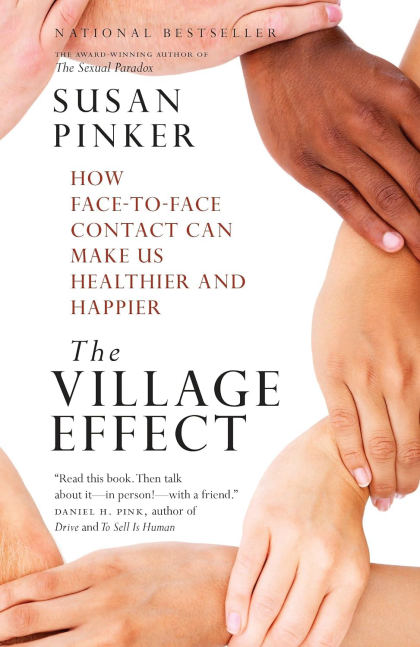
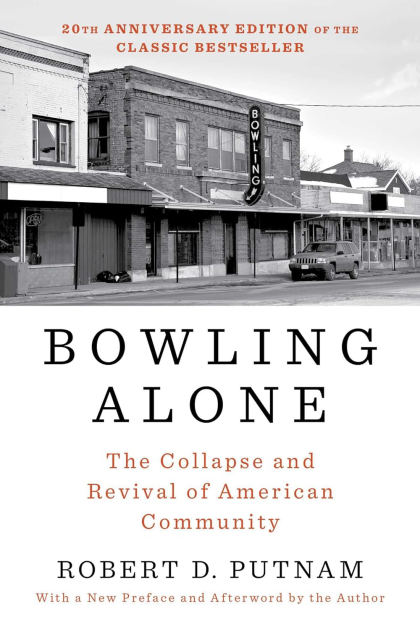
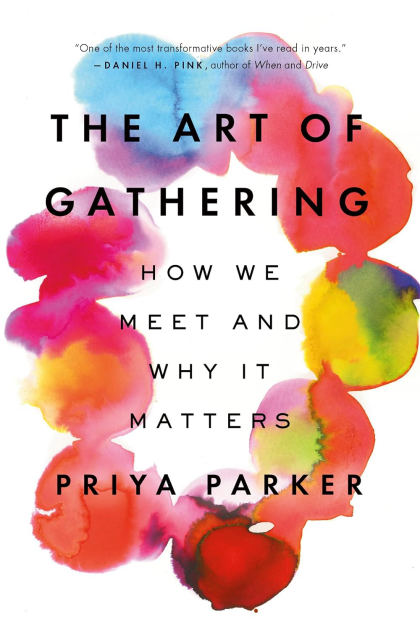
Holt-Lunstad et al., PLOS Medicine, 2010 · Cacioppo & Patrick, Loneliness, 2008 · Waldinger & Schulz, The Good Life, 2023 · Fratiglioni et al., The Lancet Neurology, 2004