me Back to the tree
drop assets/emotional-loop.mp4 here
Dimension 06Internal dimension

Emotional Wellbeing

Feeling something and knowing what you are feeling are two different capacities. The research on emotional wellbeing is largely concerned with the second.

Emotional wellbeing is your relationship with your own inner life: the degree to which you can recognise, name, process, and appropriately express what you feel. The research frames this as a functional relationship with the full range of human emotion, rather than a pursuit of consistent happiness. That means being able to hold difficulty without being overwhelmed by it, to feel what is true without acting on it impulsively, and to bring your actual emotional self (rather than a managed performance of it) into the situations that matter.

Owl
The owl in the hollow says

"Suppression has costs, expression has costs, and regulation is the skill that sits between them: what you do with what you feel matters as much as what you feel."

– your guide to the eight dimensions

On the intelligence of what you feel

Emotional release
When did you last feel something clearly, and let yourself feel it?
Suppressed emotion
And what happens when you don't?

The emotional dimension is the one most thoroughly misunderstood by modern culture, which teaches (through example and expectation) that emotions are obstacles to be managed, when the research consistently frames them as information to be read. People who can identify and name their emotional states with precision make better decisions, recover more quickly from stress, have lower rates of anxiety and depression, and report significantly higher life satisfaction. The vocabulary of feeling that makes this possible is, by the research's own terms, a cognitive tool with measurable consequences.

Key research finding

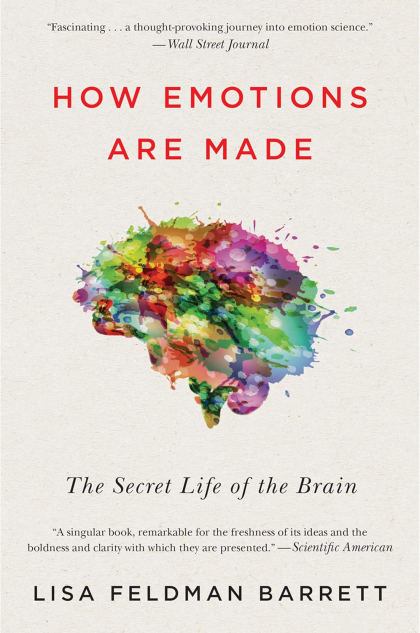
Lisa Feldman Barrett's research on emotional granularity – the ability to distinguish between specific emotional states rather than simply feeling "bad" or "stressed" – found that people with high emotional granularity are 30% less reactive to negative stimuli, make better use of coping strategies, and are significantly less likely to engage in destructive behaviour under stress. Precision in emotional language is measurably protective.

30%
less reactive to stress in people with high emotional granularity – the ability to name feelings precisely
Barrett et al., Psychological Science, 2001 · read the source
58%
of performance across all job types is accounted for by emotional intelligence
Bradberry & Greaves, Emotional Intelligence 2.0, 2009 · read the source

What the evidence actually says

The research on emotional wellbeing converges on four capacities: naming (the ability to identify what you are feeling with precision), processing (the ability to move through an emotional experience without deflecting), regulating (the ability to modulate emotional intensity without suppression), and expressing (the ability to communicate emotional states to others in ways that strengthen connection). Suppression, the most common emotional strategy in cultures that prize control, is consistently associated with higher physiological stress, reduced immune function, and poorer relationship outcomes.

Naming
Building a precise vocabulary for emotional states beyond "fine," "stressed," or "tired."
Emotional granularity predicts better decision-making, lower reactivity, faster recovery.
Processing
Allowing emotional experiences to complete their arc rather than cutting them short.
Suppression increases physiological arousal; processing reduces it. Journalling is a proven tool.
Regulating
Managing emotional intensity through breathing, movement, or perspective-taking – not elimination.
The goal is not to feel less, but to feel without being flooded.
Expressing
Sharing emotional experience with trusted others, appropriately and honestly.
Emotional disclosure is one of the strongest predictors of intimacy; chronic suppression isolates.

Of naming, processing, and the window of tolerance

Three aspects of emotional wellbeing carry the clearest research footprint: the power of emotional granularity, the difference between processing and suppression, and the concept of the window of tolerance (the zone in which emotional experience can be held without becoming overwhelming).

The vocabulary of feeling

Brené Brown's research on emotion identified that most adults use a vocabulary of three emotions (happy, sad, angry) to describe an inner landscape of several dozen distinct states. The difference between "anxious" and "disappointed" matters behaviourally: they call for different responses, different conversations, different adjustments. Barrett's research goes further: the brain uses existing emotional concepts to construct emotional experience, which means that a richer vocabulary produces a measurably richer inner life, and the most practical first intervention in emotional wellbeing turns out to be lexical.

Writing in a journal
Private writing

Processing vs. suppression

James Pennebaker's research on expressive writing has, over three decades, established a robust finding: writing about emotionally difficult experiences for fifteen to twenty minutes on three to four consecutive days produces measurable improvements in physical health, immune function, mood, and cognitive performance. The mechanism, the research clarifies, is meaning-making rather than catharsis: processing converts raw emotional experience into narrative, which reduces the amygdala's threat-response and integrates the experience into long-term memory without ongoing activation.

The window of tolerance

Dan Siegel's concept of the window of tolerance describes the zone of emotional activation within which experience can be processed, as opposed to bypassed or overwhelming. Below the window, the nervous system shuts down (dissociation, numbness, withdrawal); above it, it floods (panic, rage, overwhelm). The practice of emotional wellbeing is the practice of widening this window so that more of life can be felt, held, and worked with; therapy, honest conversation, and reflective practice are, in their different ways, doing exactly that.

"What the window of tolerance offers is the capacity to hold difficult feelings without being overrun by them, which turns out to be a more stable and more achievable state than calm."

Three exercises for a more honest inner life

None of these require therapy, emotional fluency you do not currently have, or more vulnerability than feels safe. They require only the willingness to slow down enough to notice.

Exercise 01
15 min

The Feeling Inventory

  1. At the end of each day for one week, pause for five minutes and ask: what am I feeling right now? Do not settle for the first word. Try three.
  2. If you get stuck, use a reference: Brené Brown's atlas of emotions lists eighty-seven distinct emotional states. Look for one that fits more precisely than your first attempt.
  3. Notice whether naming the feeling changes your relationship to it – whether precision brings any small relief or recognition.
  4. The point is not to feel better immediately. It is to become someone who knows what they are feeling, which is a precondition for being able to do anything useful with it.
Exercise 02
20 min

The Twenty-Minute Write

  1. Choose one emotionally significant experience from the last year – something unresolved, difficult, or still taking up space in your mind.
  2. Write about it for twenty minutes without stopping. Do not edit. Write about what happened, what you felt, and what it means to you.
  3. Repeat on three more occasions over the following week, with the same or different material.
  4. Pennebaker's research suggests the benefits accumulate across sessions. What you are doing is not venting – it is constructing a narrative that your brain can file, rather than keep alerting you to.
Exercise 03
20 min

The Suppression Audit

  1. Identify three situations from the last week where you felt something and did not let yourself feel it fully – where you moved on, changed the subject, or decided the feeling was inappropriate.
  2. For each: name the feeling you cut short, and what you were afraid would happen if you let it continue.
  3. You do not need to revisit the feeling now. Simply note what you were protecting yourself from – and whether that protection was necessary.
  4. The audit is not an instruction to feel more. It is an invitation to notice what you have decided you cannot feel, and to ask whether that decision is still serving you.
Owl
What comes next

Ready to put this into practice?

Four tools for this dimension – from a free printable guide to a full seasonal workbook. Each designed to make the change last.

scroll to explore
Practice this dimension

Four ways to begin with emotional wellbeing

Each product can be used alone, or layered as a season-long practice. Begin with the free guide; the rest is patient work.

Free · 34 pages

The Free Guide

A printable PDF covering all eight dimensions of wellbeing – evidence, exercises, and a map for the whole tree. Yours in exchange for an email address you will not regret giving.

Free
Take the quiz, the guide follows by email →
30 days · daily prompt

30 Days of Practice

Four thematic weeks. One small practice each day, 5–20 minutes, building from one orientation to the next. By day thirty, the practice has had time to settle – a beginning, with enough evidence of its own to continue.

From €19
Notify me when ready
Waiting list · under production.
Quarterly · 13 weeks

Quarterly Workbook

A bound workbook for one season: weekly audits, deeper essays, three reflective rituals. Designed for slower progress that compounds rather than burns out.

From €49
Notify me when ready
Waiting list · research ongoing.
online · 60 minutes

Webinar

A guided look at your emotional landscape with the four levers as the lens. We arrive at three changes you would have arrived at alone, in roughly half a year.

By inquiry
Notify me about the next session
Next session · join the list.
After reading · score yourself in the other seven

Where else does the body need looking after?

You have just read about one dimension. The other seven sit on the same tree. A short, quiet self-assessment will tell you which to attend to next, and the result lands in your inbox.

Take the quiz
25 questions · no shame in any score
Recommended reading · affiliate

Books that shaped this dimension

Five titles that informed the writing here, with our honest commentary. We earn a small fee if you buy through these links.

Research sources

Barrett et al., Psychological Science, 2001 · Gross & Levenson, J. Personality & Social Psychology, 1993 · Pennebaker & Beall, J. Abnormal Psychology, 1986 · Brown, Atlas of the Heart, 2021