The physical dimension is the one most people feel they already understand. The research suggests this confidence is the main obstacle to working with it well.
Physical wellbeing covers the condition of your body in relation to movement, sleep, nutrition, and recovery. Of all eight dimensions, it is the most written about and, in practice, the most consistently negotiated away: sleep shortened for productivity, movement cancelled for busyness, meals eaten at speed or skipped altogether. The body's state sets the baseline from which every other dimension operates, and a mind running on inadequate sleep is a fundamentally different instrument than a well-rested one.

"The research on what the body actually requires in terms of sleep, movement, and recovery is not complicated. What is complicated is organising a life that makes those requirements possible to meet."


The physical dimension is unusual in the wellbeing literature because the interventions are among the most studied in all of medicine and among the least followed. We know, with extraordinary precision, how much sleep we need, how much movement is beneficial, and what eating patterns support cognitive and metabolic health. Where people fall short of these recommendations, the obstacle is rarely informational: our environments, schedules, and social norms are systematically organised to make the required behaviours difficult, and to frame their absence as acceptable.
A 2018 meta-analysis by Schuch et al. across 49 studies and 266,000 participants found that physical activity is as effective as antidepressants for treating mild to moderate depression – and produces measurable cognitive benefits within 20 minutes of a single session. The brain, quite literally, works better when the body moves.
The physical wellbeing research consistently converges on four levers: movement (regular physical activity, ideally both aerobic and strength-based), sleep (sufficient duration and consistent timing), nutrition (dietary patterns rather than specific foods), and recovery (the deliberate management of rest, stress, and restoration). Of these, sleep is the most underrated: it governs the performance of all the others, and no nutrition plan, no training programme, and no mindfulness practice fully compensates for chronic sleep restriction.
Three aspects of physical wellbeing carry the clearest research footprint: the non-negotiable role of sleep, the cognitive and emotional effects of movement, and the simple but neglected principle of recovery. Each can be attended to this week.
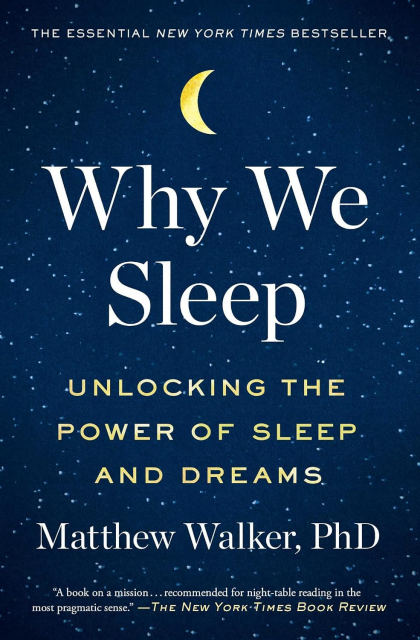
Matthew Walker's synthesis of sleep research makes a case that is difficult to argue with: sleep is an active biological process during which the brain consolidates memory, clears metabolic waste, regulates immune function, and processes emotional experience. Cutting sleep by ninety minutes, from eight hours to six and a half, reduces immune competence by 70% over a single week, while also impairing decision-making, increasing emotional reactivity, reducing empathy, and producing cardiovascular damage that compounds over years. Sleep reaches every aspect of health, which is what makes it the variable the other three levers depend on.
John Ratey's research on exercise and the brain documents what the data has been suggesting for decades: that physical movement is a neurological event as much as a metabolic one. A single bout of aerobic exercise increases levels of BDNF (brain-derived neurotrophic factor, effectively a growth hormone for neurons) within minutes. Regular exercise builds new neural connections, reduces the volume of the amygdala (the brain's threat-detection centre), and produces measurable improvement in attention, memory, and executive function; far from competing with cognitive work, it is one of the most reliable ways to improve it.
Most people treat recovery as the absence of effort, a passive state that happens automatically when there is nothing else to do. The research on physical adaptation tells a different story: recovery is an active biological process, and it requires the same deliberate attention as training. The gains from exercise occur in the rest that follows the session, and the same principle extends to cognitive and emotional effort; the body makes no distinction between types of stress, and it requires the load removed and adequate time to adapt.
"Recovery is where adaptation happens: in the body after training, in the mind after sustained effort, in both when the load has been removed long enough."
None of these require equipment, a gym membership, or an overhaul of your current life. They require only the willingness to attend to what you have been deferring.
You have just read about one dimension. The other seven sit on the same tree. A short, quiet self-assessment will tell you which to attend to next, and the result lands in your inbox.
Take the quizFive titles that informed the writing here, with our honest commentary. We earn a small fee if you buy through these links.
Schuch et al., JAMA Psychiatry, 2018 · Walker, Why We Sleep, 2017 · Arem et al., JAMA Internal Medicine, 2015 · Hirshkowitz et al., Sleep Health, 2015